The South Carolina foreclosure process: a step-by-step timeline
By Marcus Beck · Updated 2026-07-19
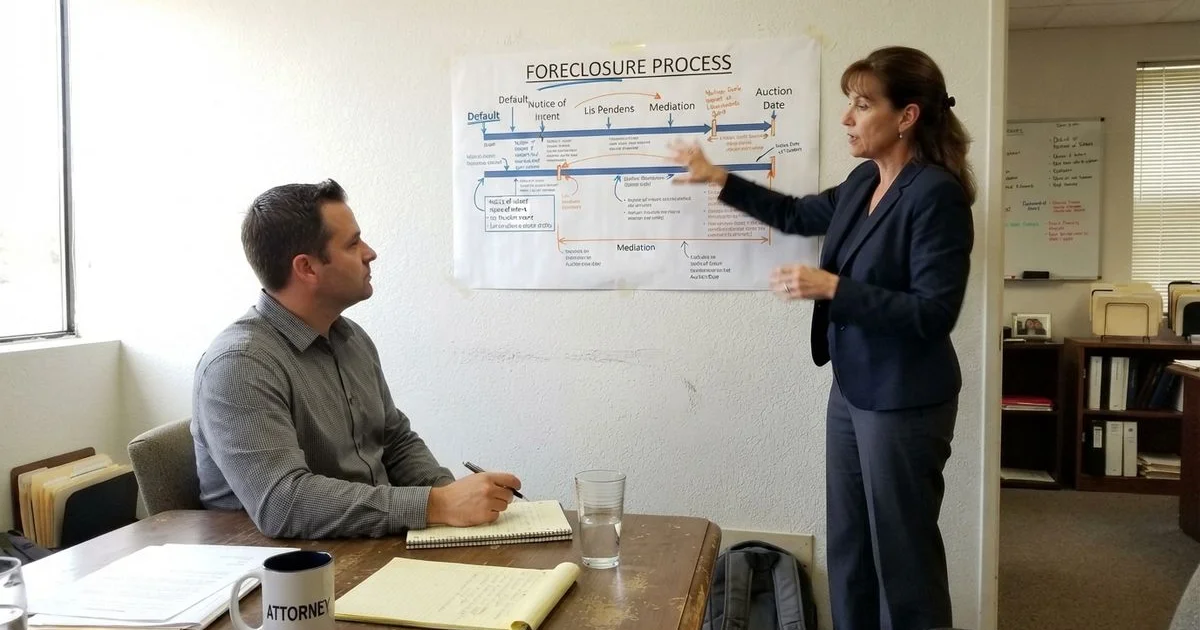
South Carolina runs foreclosures through the court system, which means there’s a defined sequence of steps, not a single cutoff date. Knowing where you are in that sequence tells you how much time you actually have.
This is general information, not legal advice. Actual timelines vary by county, court caseload, and whether the case is contested.
The stages, in order
| Stage | What happens |
|---|---|
| Missed payments | The clock starts, but no legal action has begun yet |
| Notice of default | The lender formally notifies you that you’re in default, often required before a lawsuit can be filed |
| Lawsuit filed | The lender files a foreclosure complaint in court; you’re served and have a limited window to answer |
| Court proceedings | If contested, the case goes through hearings, potentially before a master in equity, who handles most residential foreclosure cases at the county level |
| Order of foreclosure and sale | The court issues judgment allowing the property to be sold if the debt isn’t resolved |
| Sheriff’s or master’s sale | The property is auctioned, often at the courthouse |
| Upset bid period | A window, historically around ten days, during which a higher bid can still be placed to overturn the auction result |
| Confirmation of sale | Once the upset bid period passes without a new bid, the court confirms the sale as final |
Where you actually have options
The earlier you are in this sequence, the more options are open. Before a lawsuit is filed, a direct conversation with your servicer about forbearance or a modification can resolve things without court involvement at all. Once a case is filed, answering the complaint on time preserves your ability to raise defenses instead of having a default judgment entered against you.
It’s worth treating each stage as a distinct decision point rather than one long slide toward a sale. A case that looked hopeless during the notice-of-default stage can still be turned around once it reaches court, particularly if the lender’s paperwork has gaps or the amounts claimed don’t match your own records.
Even after a sale date is scheduled, options exist. A properly filed bankruptcy petition triggers an automatic stay that halts a scheduled sale immediately. Negotiating a last-minute reinstatement or modification with the lender is also still possible, though harder to pull off with less time on the clock.
Why judicial foreclosure changes the math
Because South Carolina requires a court case, homeowners generally get more built-in time and more formal opportunities to respond than they would in a state that allows a purely out-of-court process. That’s not a guarantee of a favorable outcome, but it does mean deadlines are procedural and specific, which is exactly where an attorney’s knowledge of local court practice tends to matter most. The guide on what to expect when you hire a foreclosure defense attorney walks through what that representation looks like once you bring someone on.
County-level scheduling also affects how long each stage takes in practice. A master in equity’s docket in a busier county can move differently than a smaller one, which is part of why timelines vary so much between cases that otherwise look similar on paper.
What to do based on where you are
If you’ve missed payments but haven’t been sued yet, contact your servicer’s loss mitigation department and document everything in writing. If you’ve been served with a summons and complaint, calendar the response deadline immediately and don’t let it pass. If a sale date has already been set, treat it as urgent: consult a foreclosure defense attorney right away, since the range of realistic options shrinks the closer that date gets.
The bottom line
A foreclosure timeline has clear stages, and each one carries different options. The court process gives you more checkpoints than you might expect, but only if you act at each one instead of waiting for the next notice to arrive. Browse the full directory of local attorneys, and see our scoring methodology for how we rank the ones who handle these cases locally.
Common questions
- How long does a foreclosure take in South Carolina from start to finish?
- It varies widely by county court schedules and whether the case is contested, but a judicial foreclosure typically takes several months to over a year from the first missed payment to a completed sale.
- Do I lose the house the moment I miss a payment?
- No. There's a formal process with multiple stages before a sale can happen, including a required notice period and a court case. Missing payments starts the clock, but it doesn't end things immediately.
- Can I still act after a sale date has been scheduled?
- Yes, though options narrow. Filing bankruptcy before the sale, negotiating directly with the lender, or raising a defense in court are all still possible up until the sale actually occurs.
- What happens after the sale itself?
- South Carolina has an upset bid period after a judicial sale, during which a higher bidder can still top the winning bid. Once that period passes without a new bid, the court confirms the sale.